


Pavers vs. Concrete vs. Flagstone: Which Patio Material Is Best in San Antonio?
The short answer: Concrete is the most budget-friendly patio surface. Pavers usually cost about 50% more, but they flex as the soil shifts and can be repaired a few pieces at a time. Flagstone gives the most natural Hill Country look and works great for paths. All three last when the base underneath is built right.
Same yard, two prices
This year we priced a large north San Antonio backyard two ways. The project also included a basketball hoop and ball netting, so the surface had to handle real use.
Concrete: about $15,500 installed
Pavers set on base: about $24,000 installed
That's the tradeoff most homeowners weigh: lower cost now, or a surface that's easier to repair and change later. If you want a rough idea of what a patio runs overall, our post on how much a patio costs in San Antonio walks through it.

Concrete
Best for: large flat areas, sport courts, outdoor furniture, tighter budgets.
Concrete is the lowest cost of the three and gives you a smooth, continuous surface. It's easy to sweep, and chair legs never catch on a joint.
The tradeoff is that concrete is one solid piece. Parts of San Antonio sit on clay soil that swells when it's wet and shrinks when it's dry, and that movement can crack a slab. Good base prep and control joints help a lot, and they guide any cracking to places you won't notice.
Pavers
Best for: patios you want to last for decades, areas near the house, anyone who wants color or pattern options.
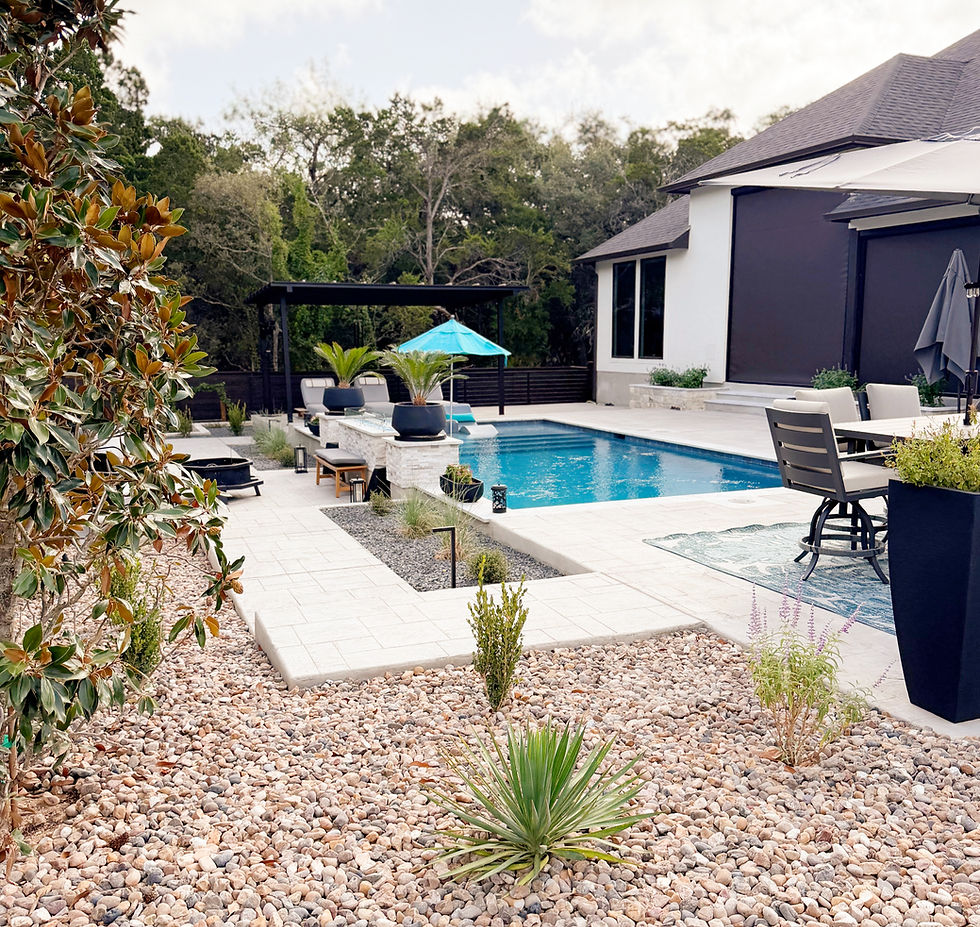
Pavers are individual pieces set on a compacted base. When the ground moves a little, the joints flex instead of cracking. If one gets damaged, or someone needs to reach a pipe underneath, a few pavers come up and go back down.
They cost more because the base prep and installation take more labor. Right now we're building a paver patio in Fair Oaks Ranch where the drainage pipe and catch basins went in first, then the base, then the pavers. Once the patio is down, nobody sees that part. It's still the part that matters most.

Flagstone
Best for: a natural look, garden paths, stepping areas, Hill Country homes.
Flagstone can be mortared into a solid patio or laid loose on a compacted base with decomposed granite, grass or turf between the stones.
It's the most natural-looking option and pairs well with native planting. Every stone is a little different, which is part of the charm. Sean, one of our senior consultants, has a creative eye for stonework and helps clients pick stone that suits the house. If flagstone is on your list, our post on flagstone patio installation in San Antonio goes deeper.
What about a deck?
On a sloped yard or a raised back door, a deck can make more sense than a patio. Composite decking costs more than a patio, but it handles slopes and changes in level without major grading.
Which material holds up best in Texas heat?
All three can last for decades. What decides it is what's underneath: grading, base depth, compaction, and drainage. That's where we spend the time, because it's the part you can't fix later without starting over.
For heat, lighter colors stay cooler underfoot than dark ones, whichever material you choose. And shade does more than any surface ever will.
Spend where it matters
There's more than one way to build a great patio. Sometimes pavers are worth the extra cost, like the main patio off the back door. Sometimes concrete is the smart call, like a big sport court. Plenty of yards mix both. The one place we won't cut corners is the base and drainage, whatever goes on top.
Quick comparison
Concrete: lowest cost, clean and modern look, can crack as soil moves, repairs leave a visible patch. Best for big flat areas and courts.
Pavers: about 50% more than concrete, lots of pattern and color options, flexes at the joints, repairs mean swapping a few pieces. Best for main patios.
Flagstone: cost varies by stone and setting, natural Hill Country look, loose-laid stone flexes while mortared stone can crack, repairs mean resetting a stone. Best for paths and natural settings.
Not sure which fits your yard? Book a consultation. We'll walk the site with you, look at your soil and drainage, and show you projects in each material. You can also see more of our patio and hardscape work.
Patio material FAQs
Do pavers sink over time?
Pavers can settle when the base isn't compacted well or water collects underneath. A properly built base and good drainage prevent that.
Does concrete crack in San Antonio?
It can, especially on clay soil that shrinks and swells. Proper base prep and control joints reduce cracking and guide it to places you won't notice.
Can I mix materials?
Yes, and it often looks great. A paver patio with flagstone paths, or a concrete court next to a paver seating area, is common.
How do I get a price for my patio?
Our project estimator gives you a ballpark range online. For real numbers, book a consultation. We'll walk the site, take measurements, and send a line-by-line proposal, usually about a week later.


Comments