
Xeriscaping in San Antonio: What Works, What Doesn't & What It Costs

Xeriscaping has a branding problem. A lot of people hear the word and picture a yard covered in gravel with one lonely cactus in the middle. That's not what a good San Antonio xeriscape has to look like. Done well, xeriscaping uses plants, stone, ground cover and irrigation more intentionally so the yard needs less water and less babysitting while still feeling full and designed.
What Works in San Antonio
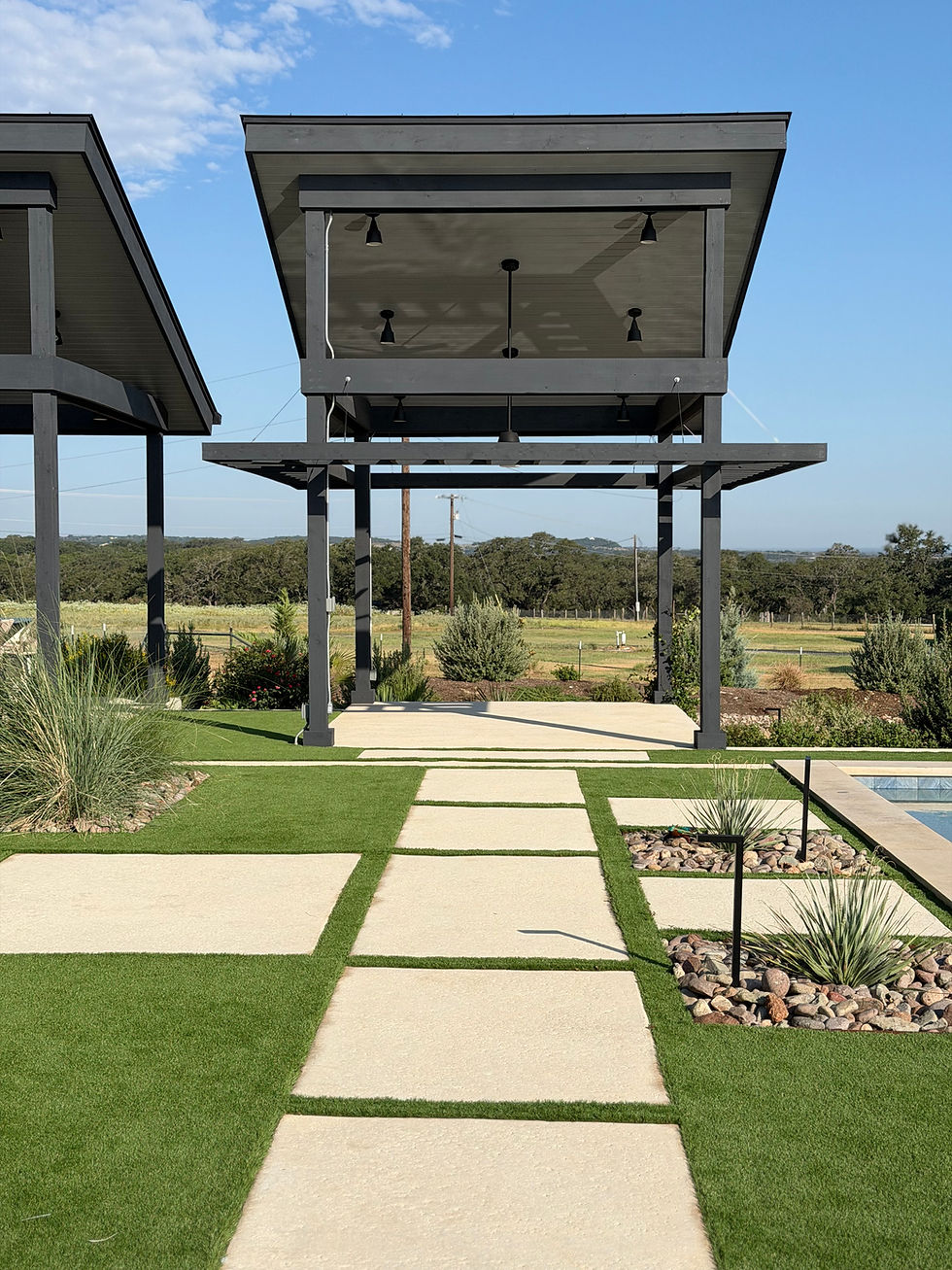
Native and Texas-adapted plants are a good starting point, but the right plant still has to be in the right place. Full sun, deep shade under live oaks, reflected heat, deer pressure and soil conditions all change what will perform well. We like layered planting with grasses, flowering perennials, shrubs and groundcovers, then use limestone boulders and textured ground cover to give the landscape structure.
You Don't Have to Remove Every Bit of Grass
Grass is useful where kids play, dogs run or you want a soft place for bare feet. It makes less sense in narrow side yards, deep shade or large areas nobody uses.
A good xeriscape can keep lawn where it earns its keep and replace it where it doesn't.

Xeriscape Doesn't Mean Zero Water
New plants still need consistent watering while they establish. Even established drought-tolerant plants may need supplemental water during long dry periods. Drip irrigation can put water where plants need it without watering large areas of rock or ground cover. Less water is the goal. Zero water isn't.
What Doesn't Work
Covering the whole yard in one kind of rock may reduce mowing, but it can create a hot, flat space that doesn't feel much like a landscape. Choosing plants because the tag says “drought tolerant” without considering sun, soil or deer pressure doesn't work either. And xeriscaping won't magically fix an existing drainage problem. If water collects in the yard now, we want to understand that before installing the new landscape.
What Does Xeriscaping Cost in San Antonio?
At VHS Outdoor Living, xeriscaping falls within our broader landscape-renovation work. Smaller landscape renovations generally start around $8,000, while larger conversions can move well beyond that depending on the size of the yard, plant quantities, stone and ground-cover selections, demolition, irrigation and site conditions. The goal isn't to spend money replacing every living thing with rock. It's to spend it where it creates a yard that looks good, uses water more intelligently and asks less of you every weekend.
Yards Built for Living, Not Babysitting
A lower-maintenance yard should still have personality. It should change through the seasons, give you something to look at and feel like it belongs with the house.
Good at the work. Good to work with. We'll help you choose plants and materials based on the conditions in your yard, explain the maintenance they really need and design the pieces to work together. If you're ready for less lawn and more landscape, schedule a consultation with VHS Outdoor Living.


Comments